Key Takeaways
The R760xa supports up to 12 single-slot or 4 double-slot PCIe Gen5 GPUs with 350W TDP capacity in a 2U chassis, delivering maximum GPU density for AI/ML workloads where rack space is premium.
Equipped with dual 5th Gen Intel Xeon processors (128 cores), 8TB DDR5 memory at 5600 MT/s, and Gen5 NVMe storage, the R760xa eliminates I/O bottlenecks in GPU-accelerated computing pipelines.
The R760xa is purpose-built for GPU acceleration, unlike the general-purpose R760; choose it only when GPU compute density is the primary criterion and storage can be externalized to shared infrastructure.
Enterprise security features include Silicon Root of Trust, cryptographically signed firmware, TPM 2.0, and System Lockdown mode, making it compliant with NIST, ISO 27001, and FedRAMP frameworks.
Before procurement, validate data center power delivery and cooling capacity for maximum GPU TDP configurations, assess network fabric compatibility via OCP 3.0 slots, and engage qualified IT partners for configuration optimization.
Ideal deployment scenarios include AI inferencing, distributed ML training clusters, real-time GPU analytics, and edge AI gateways where maximizing compute per physical rack unit reduces total cost of ownership.
As AI inference, machine learning pipelines, and high-density analytics workloads continue to reshape enterprise IT infrastructure in 2026, selecting the right server platform has never been more consequential. The Dell PowerEdge R760xa represents a purpose-engineered solution for organizations that require maximum GPU density within a standard 2U rack footprint. Unlike general-purpose rack servers, the R760xa is architected from the ground up to support GPU-accelerated computing at scale — making it a critical consideration for data center operators, enterprise IT managers, and infrastructure teams evaluating their next hardware refresh cycle.
This guide provides a technical walkthrough of the Dell PowerEdge R760xa’s architecture, configuration options, and deployment use cases to help IT professionals make an informed procurement decision. Whether you are managing a large-scale AI training cluster or deploying distributed inferencing nodes across a regional data center, understanding the R760xa’s specifications and capabilities is essential for aligning hardware with workload demands.
Understanding the Dell PowerEdge R760xa Architecture
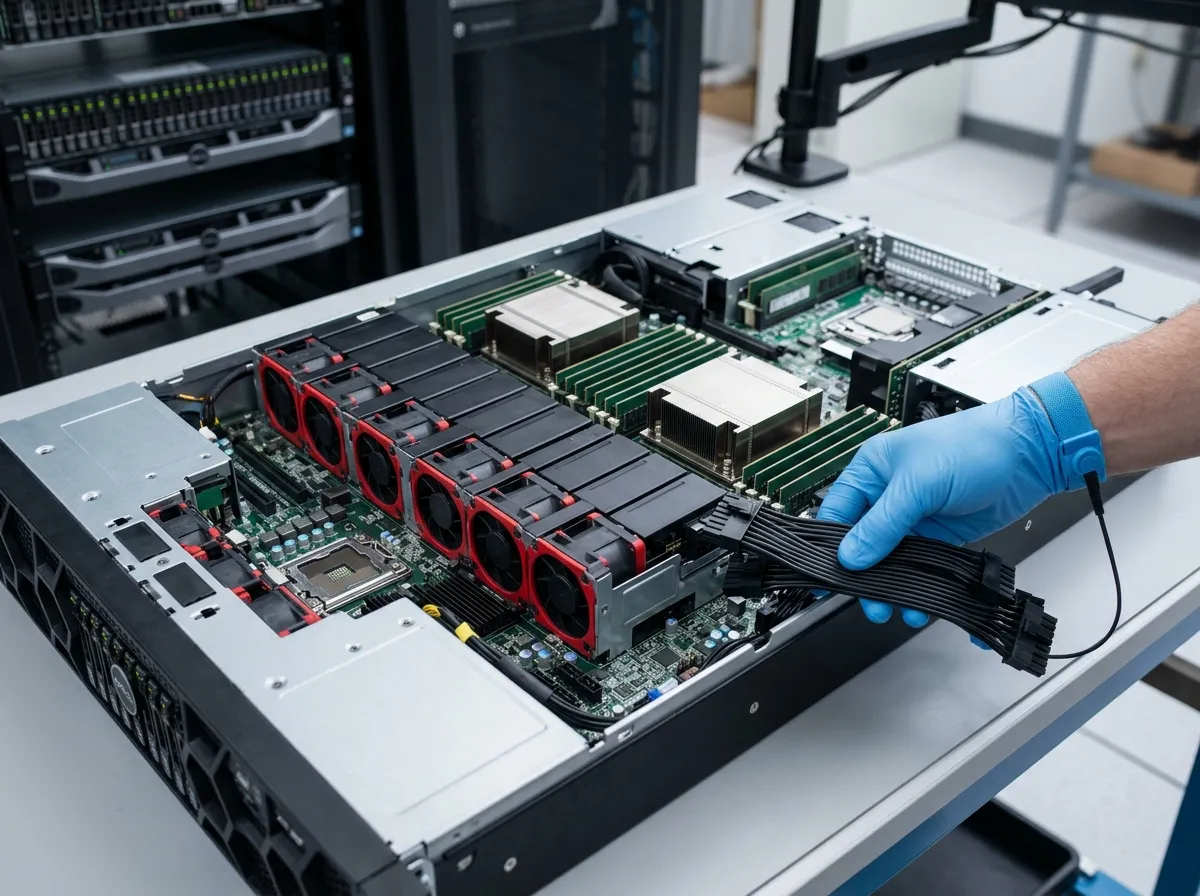
The Dell PowerEdge R760xa is a 2U dual-socket rack server built on a platform optimized specifically for GPU-dense acceleration workloads. Its chassis design departs from standard rack server conventions by prioritizing PCIe expansion lanes and thermal headroom for high-TDP accelerators rather than maximizing storage density. This fundamental architectural decision makes it a specialized instrument in the enterprise hardware portfolio.
At the processor level, the R760xa supports 4th or 5th Generation Intel Xeon Scalable processors, delivering up to 64 cores per socket and 128 total CPU cores across both sockets. This processing capacity provides the thread density required to manage data pre-processing pipelines, model coordination, and I/O operations alongside GPU compute tasks.
Memory Subsystem
The R760xa features 32 DDR5 DIMM slots with a maximum addressable memory capacity of 8TB using RDIMM configurations. DDR5 memory operates at speeds up to 5600 MT/s, providing substantially higher bandwidth compared to DDR4 predecessors. This elevated memory throughput is critical for AI and machine learning workloads where large model tensors and dataset batches must move efficiently between system memory and GPU VRAM.
PCIe Gen5 Expansion and GPU Density
The defining characteristic of the Dell PowerEdge R760xa is its GPU accommodation capability. The server supports PCIe Gen5 expansion, enabling the following GPU configurations:
Up to 12 single-slot PCIe Gen5 x8 GPUs for maximum GPU count per chassis
Up to 4 double-slot PCIe Gen5 x16 GPUs for full-bandwidth, high-performance accelerators
Support for accelerators with TDP ratings up to 350W, accommodating current-generation high-performance GPUs
Air-cooled thermal design rated for sustained operation at maximum GPU TDP configurations
This level of GPU density within a 2U form factor is particularly valuable in environments where rack space carries a premium cost and maximum compute per unit of physical space is an operational priority.
Storage Configuration Options
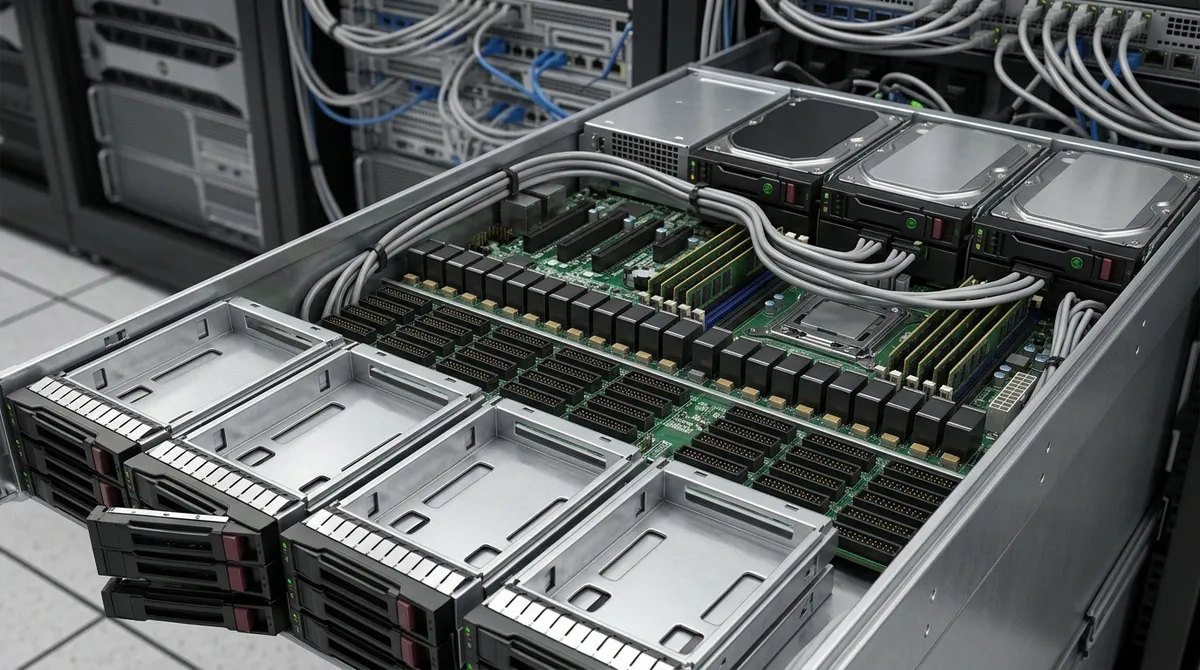
While the R760xa prioritizes GPU expansion over storage density, it still offers a flexible set of storage bay configurations to support fast local data access required by AI training and inferencing workloads. The available storage options include:
6x E3.S Gen5 NVMe bays for high-density NVMe storage
6x 2.5-inch NVMe bays for standard enterprise NVMe drives
8x 2.5-inch hybrid SAS/SATA/NVMe bays for tiered storage flexibility
Optional BOSS (Boot Optimized Storage Solution) module with dual M.2 NVMe SSDs for OS boot isolation
The inclusion of Gen5 NVMe support ensures storage bandwidth keeps pace with GPU data consumption rates, reducing I/O bottlenecks that can undermine accelerator utilization in data-intensive workloads.
R760xa vs. R760: Key Architectural Differences
IT procurement specialists evaluating the Dell PowerEdge server line must understand the functional differentiation between the R760 and R760xa to avoid misalignment between hardware selection and workload requirements. The table below summarizes the primary distinctions:
Specification | Dell PowerEdge R760 | Dell PowerEdge R760xa |
|---|---|---|
Primary Use Case | General-purpose enterprise workloads | GPU-accelerated AI/ML/DL inferencing |
GPU Support | Limited GPU expansion | Up to 12 single-slot or 4 double-slot GPUs |
PCIe Generation | PCIe Gen5 | PCIe Gen5 (GPU-optimized layout) |
Max Memory | 8TB DDR5 | 8TB DDR5 |
Storage Density | Higher storage bay count | Moderate (GPU expansion prioritized) |
Cooling Design | Air-cooled | Air-cooled, optimized for 350W TDP GPUs |
Ideal Deployment | Database, virtualization, ERP | AI training, inferencing, deep learning |
Selecting the R760xa over the R760 is appropriate when GPU compute density is the primary design criterion, and storage capacity can be supplemented through network-attached or shared storage infrastructure.
Networking and Remote Management Capabilities
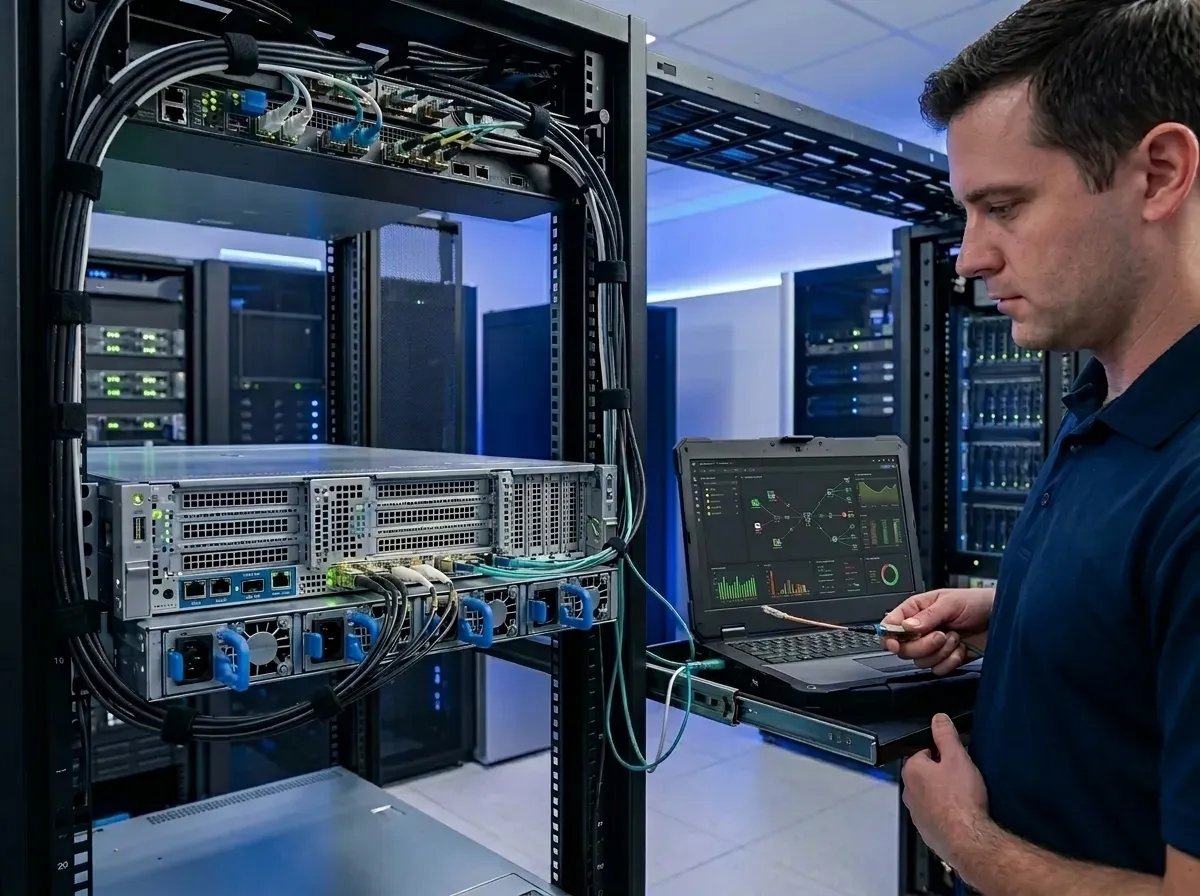
The R760xa provides robust networking and management options suited to enterprise-scale deployment. Networking is handled through an optional dual-port 1GbE LOM (LAN on Motherboard) configuration, supplemented by an OCP 3.0 slot for additional NIC expansion. This modularity allows infrastructure teams to adapt network connectivity to their existing fabric standards without requiring specialized riser configurations.
Remote management is delivered through iDRAC9 with a dedicated management port, providing out-of-band server lifecycle management including firmware updates, hardware health monitoring, virtual console access, and automated alerting. iDRAC9 integrates with OpenManage Enterprise for centralized fleet management across large server deployments. For IT teams managing distributed data centers, this remote management capability reduces on-site intervention requirements and supports proactive maintenance workflows. Network World provides ongoing coverage of enterprise server management platforms that can help contextualize iDRAC9 within broader IT operations strategies.
Security Architecture
Enterprise deployments of the Dell PowerEdge R760xa benefit from a multi-layered hardware security framework that addresses both supply chain integrity and runtime protection. The security feature set includes:
Silicon Root of Trust: Cryptographic verification anchored at the silicon level, ensuring firmware integrity from power-on
Cryptographically Signed Firmware: All firmware updates are digitally signed and verified before execution
Secure Boot: Prevents unauthorized operating systems or bootloaders from loading during system initialization
TPM 2.0: Trusted Platform Module support for hardware-based key storage and cryptographic operations
System Lockdown Mode: Restricts unauthorized changes to system configuration and firmware during production operation
These security capabilities are particularly relevant for regulated industries and organizations operating under frameworks such as NIST, ISO 27001, or FedRAMP, where hardware-level attestation and configuration control are compliance requirements.
Step-by-Step: How to Evaluate the R760xa for Your Environment
Before committing to a procurement decision, IT managers and infrastructure teams should follow a structured evaluation process to confirm that the R760xa aligns with their technical and budgetary requirements.
Define Your GPU Workload Profile — Identify whether your primary use case is AI model training, inferencing, deep learning, or analytics. Determine the required number of GPUs and their TDP ratings to confirm compatibility with the R760xa’s 350W TDP limit and slot configuration options.
Assess Memory and Bandwidth Requirements — Calculate the aggregate memory bandwidth needed by your GPU and CPU tasks. Verify that DDR5 at 5600 MT/s with up to 8TB capacity satisfies your model size and dataset requirements without creating memory bottlenecks.
Evaluate Storage Architecture — Determine whether local NVMe storage (E3.S Gen5 or 2.5-inch NVMe) is sufficient for your data pipeline, or whether supplemental shared storage is required. Factor in storage latency tolerances for your specific ML framework.
Review Network Fabric Compatibility — Confirm that the OCP 3.0 slot can accommodate your required high-speed NIC (InfiniBand, 25GbE, 100GbE) for GPU cluster interconnect or high-throughput data ingestion.
Confirm Thermal and Power Infrastructure — Validate that your data center’s power delivery and cooling infrastructure can support the R760xa’s maximum power draw when operating with high-TDP GPU configurations. Factor in redundant PSU requirements and hot-aisle/cold-aisle containment compatibility.
Consult with an IT Partner — Engage a qualified IT hardware partner to review your full infrastructure context, identify configuration gaps, and develop a procurement strategy that aligns hardware investment with operational timelines. Trifecta Networks serves as a trusted IT partner for enterprise customers evaluating Dell PowerEdge solutions, offering hardware sourcing, professional services, and ongoing infrastructure support.
Deployment Use Cases for the R760xa
Understanding where the Dell PowerEdge R760xa delivers maximum value helps align the investment with specific operational outcomes. The following use cases represent the primary deployment scenarios for this platform in enterprise environments:
AI Inferencing Nodes: Deploying pre-trained models in production environments requiring low-latency, high-throughput GPU compute
Machine Learning Training Clusters: Building distributed training infrastructure where per-node GPU density reduces cluster footprint and networking complexity
Real-Time Analytics: Running GPU-accelerated data analytics workloads on large structured or unstructured datasets
High-Performance Computing (HPC): Scientific simulation and computational fluid dynamics workloads requiring dense parallel processing
Edge AI Gateway Nodes: Deploying at regional data center edges where rack space is constrained but GPU compute demand is high
For IT procurement specialists managing ITAD cycles alongside new hardware acquisitions, evaluating the R760xa as part of a broader infrastructure refresh strategy can yield meaningful total cost of ownership improvements. Technology Reseller News covers enterprise hardware acquisition trends that are relevant to procurement professionals navigating these decisions in 2026.
Conclusion
The Dell PowerEdge R760xa is a technically differentiated server platform engineered for organizations with serious GPU-accelerated workload requirements. Its combination of dual 5th Gen Intel Xeon Scalable processors, up to 8TB of DDR5 memory, PCIe Gen5 GPU expansion supporting up to 12 single-slot accelerators, and enterprise-grade security architecture positions it as a leading option for AI, ML, and high-density analytics deployments in 2026. Evaluating this platform requires a structured approach: defining workload profiles, assessing memory and storage requirements, confirming network fabric compatibility, and validating data center power and thermal capacity.
Working with an experienced IT hardware partner ensures that your R760xa deployment is configured correctly from day one and supported throughout its operational lifecycle.
FAQs
Q: What is the maximum number of GPUs the Dell PowerEdge R760xa can support?
A: The Dell PowerEdge R760xa supports up to 12 single-slot PCIe Gen5 x8 GPUs or up to 4 double-slot PCIe Gen5 x16 GPUs, depending on the GPU form factor selected. The chassis accommodates accelerators with TDP ratings up to 350W, making it compatible with current-generation high-performance compute GPUs used in AI and ML workloads.
Q: How does the Dell PowerEdge R760xa differ from the standard PowerEdge R760?
A: The R760xa is specifically optimized for GPU-dense acceleration workloads, featuring a PCIe expansion layout designed to maximize GPU slot availability within a 2U chassis. In contrast, the standard R760 is a general-purpose server with higher storage density and broader workload flexibility but with more limited GPU expansion capacity.
Q: What processors are compatible with the Dell PowerEdge R760xa?
A: The Dell PowerEdge R760xa supports 4th and 5th Generation Intel Xeon Scalable processors in a dual-socket configuration, delivering up to 64 cores per socket and a maximum of 128 total CPU cores. This processor compatibility ensures sufficient thread density for managing data pipelines, I/O operations, and model orchestration alongside GPU compute tasks.
Q: What is the maximum memory capacity of the Dell PowerEdge R760xa?
A: The R760xa supports up to 8TB of DDR5 RDIMM memory across 32 DIMM slots, operating at speeds up to 5600 MT/s. This high-bandwidth memory configuration is designed to support large-scale AI model tensors and high-throughput data movement between system memory and GPU VRAM.
Q: What security features are built into the Dell PowerEdge R760xa?
A: The R760xa incorporates a multi-layered hardware security framework including Silicon Root of Trust, cryptographically signed firmware, Secure Boot, TPM 2.0, and System Lockdown mode. These features address supply chain integrity and runtime configuration protection, making the platform suitable for regulated enterprise environments requiring hardware-level security attestation.