Key Takeaways
- The C9300-24P-E delivers 445W PoE+ power across 24 ports, enabling simultaneous operation of IP phones, Wi-Fi 6 access points, cameras, and IoT devices without external power injectors.
- StackWise technology provides sub-50ms failover with nonstop forwarding (NSF) and stateful switchover (SSO), scaling performance to 688 Gbps switching capacity when multiple switches are stacked for enterprise resilience.
- UADP 2.0 architecture with x86 CPU enables native container hosting and third-party application execution directly on the switch, supporting edge computing and intent-based networking workflows.
- Modular uplink design allows swapping uplink modules (1G to 10G) to match evolving bandwidth requirements without replacing the entire switch, preserving capital investment as network demands grow.
- Large-scale table support includes 32,000 MAC entries, 1,024 VLANs, 1,500 security ACLs, and 1,000 SVI interfaces, positioning it for enterprise-grade deployments beyond mid-market environments.
- 208 Gbps non-blocking switching capacity in standalone mode ensures deterministic latency and wire-speed performance across all 24 ports simultaneously, eliminating access-tier bottlenecks.
Enterprise network infrastructure demands hardware that delivers consistent performance, operational flexibility, and long-term scalability without forcing unnecessary tradeoffs. The Cisco Catalyst C9300-24P-E is a purpose-built, enterprise-class stackable access layer switch that answers those demands with precision. Designed for organizations that require high-density Power over Ethernet, advanced stacking capabilities, and a programmable architecture, this switch has become a reference-grade deployment choice for network administrators and engineers managing complex environments. Whether you are refreshing an aging access layer, expanding a campus network, or converging wired and wireless infrastructure under unified management, the C9300-24P-E provides the technical depth to execute those objectives reliably. For teams exploring the Catalyst 9000 Series, this model represents one of the most balanced combinations of port density, PoE power budget, and programmability available in the access tier. This article examines eight technical reasons this switch deserves serious consideration in your next infrastructure refresh.
1. High-Density PoE+ Architecture With a 445W Power Budget
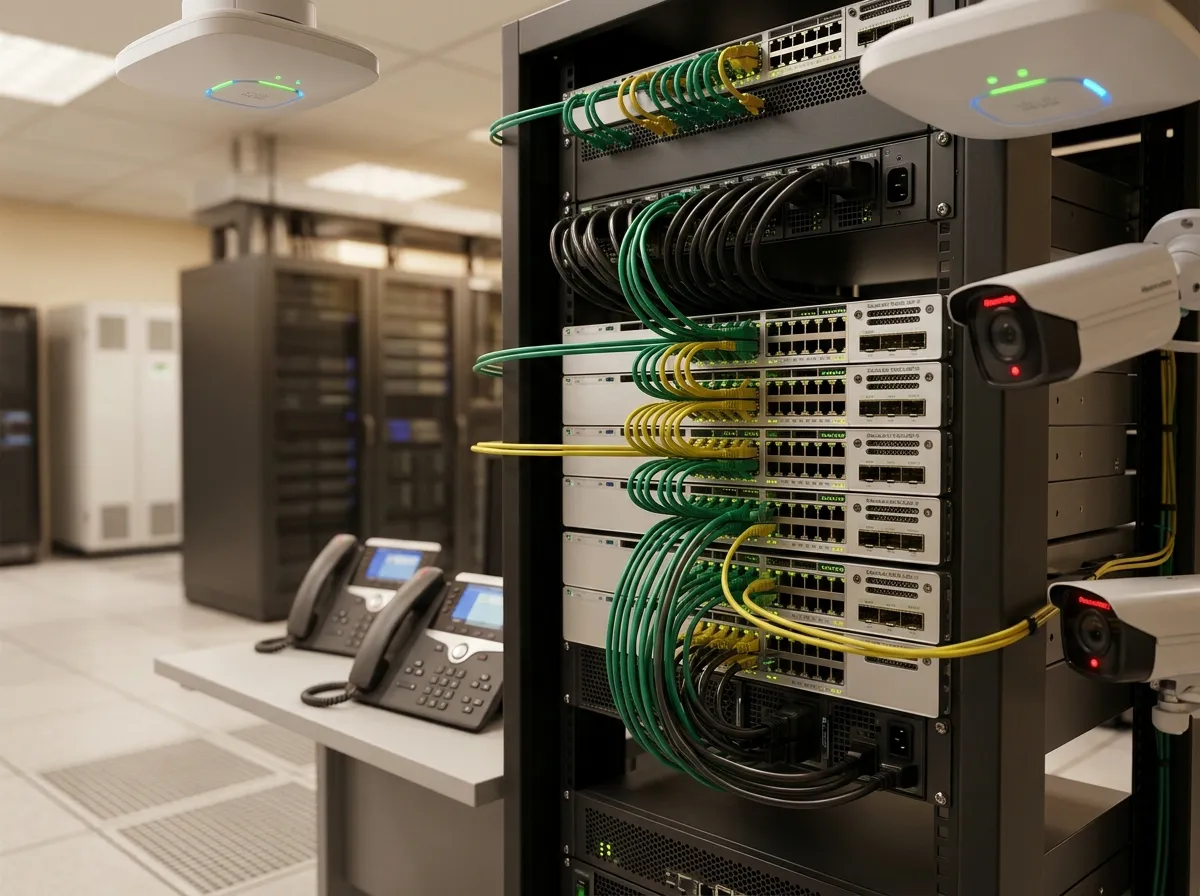
The C9300-24P-E delivers 24 x 1G PoE+ RJ-45 ports backed by a maximum PoE power budget of 445 watts. This power envelope is sufficient to simultaneously drive IP phones, Wi-Fi 6 access points, surveillance cameras, and IoT endpoints from a single switch — eliminating the need for separate power injectors or midspan devices. For network engineers designing converged access layers, this consolidation simplifies physical plant management and reduces points of failure.
The PoE+ standard supports up to 30 watts per port, making the switch compatible with a broad range of IEEE 802.3at-compliant devices. When paired with Catalyst wireless access points or Meraki access points, the C9300-24P-E provides the power and data throughput necessary for high-density wireless deployments without additional infrastructure overhead.
2. 208 Gbps Non-Blocking Switching Capacity
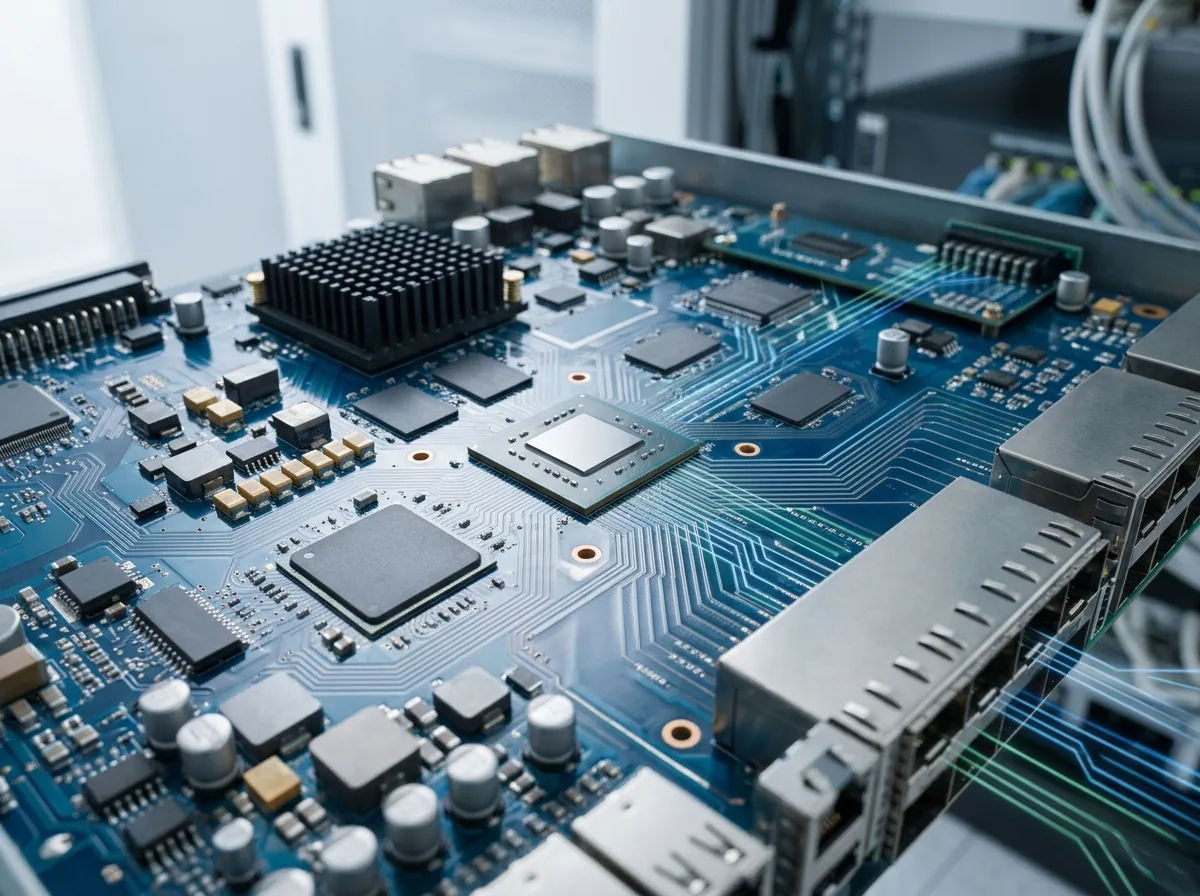
Wire-speed performance is non-negotiable in modern access layer design, and the C9300-24P-E delivers exactly that. The switch operates with a switching capacity of 208 Gbps and a forwarding rate of 154.76 Mpps in standalone configuration. These figures ensure that no traffic bottlenecks exist at the port level, even under full-load conditions across all 24 ports simultaneously.
For data-intensive environments — including those running unified communications, large-scale video surveillance, or high-throughput data collection from IoT endpoints — this non-blocking architecture ensures deterministic latency and predictable throughput. Network engineers can confidently baseline performance metrics knowing the switch will not introduce artificial constraints at the access tier.
3. StackWise Technology With 480 Gbps Stacking Bandwidth
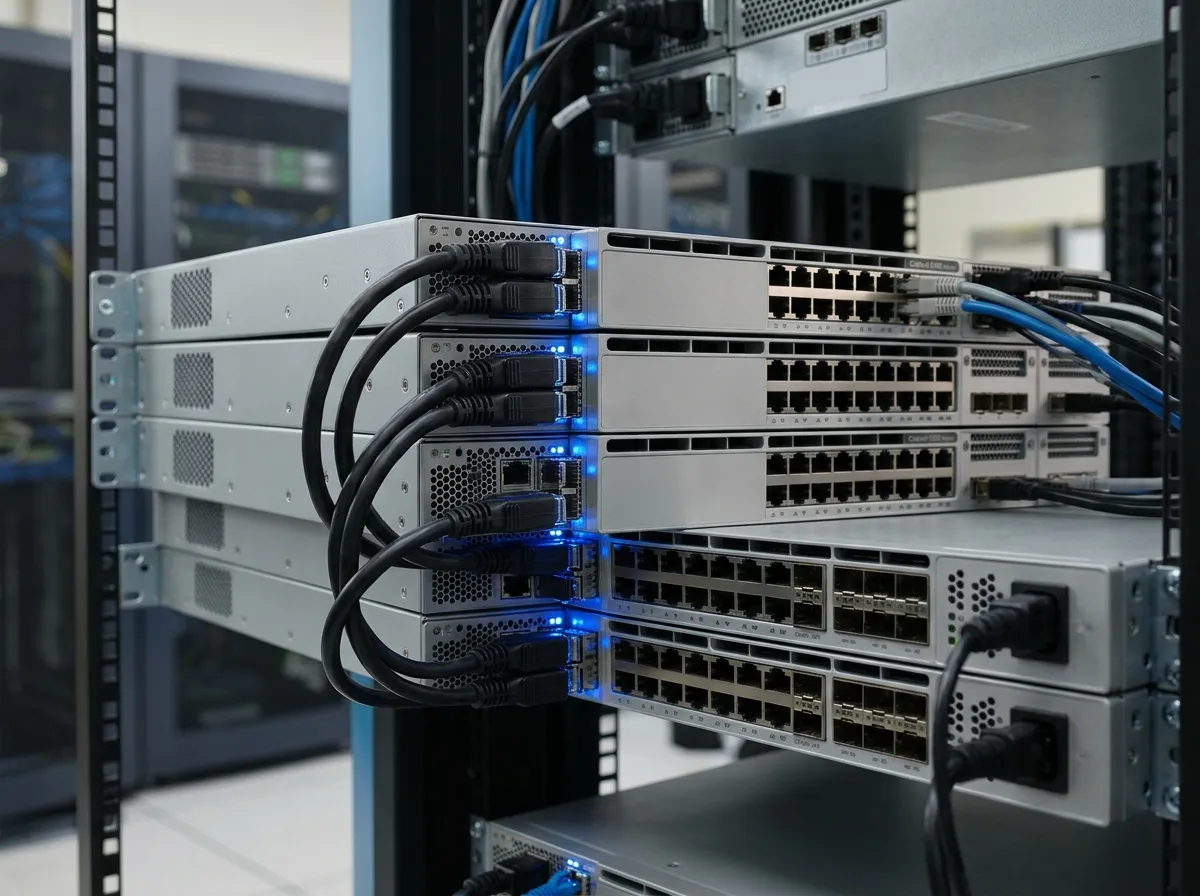
One of the most operationally significant features of the C9300-24P-E is its support for StackWise virtual technology. When multiple switches are stacked, the aggregate switching capacity scales to 688 Gbps with a combined forwarding rate of 511.90 Mpps. The stacking interconnect itself delivers 480 Gbps of bandwidth, providing a high-throughput backplane for inter-switch communication.
Beyond raw performance, StackWise enables nonstop forwarding (NSF) and stateful switchover (SSO), which together deliver sub-50ms failover resilience. For network administrators responsible for maintaining five-nines uptime in enterprise environments, this is a critical architectural advantage. The stack behaves as a single logical switch for management purposes, dramatically reducing operational complexity.

4. UADP 2.0 Architecture and x86-Based Programmability
The C9300-24P-E is built on Cisco’s Unified Access Data Plane (UADP) 2.0 ASIC, paired with an x86 CPU and enhanced memory. This combination enables the switch to function as a programmable network node capable of natively hosting containers and executing third-party applications directly on the hardware. For network engineers working in DevNet environments or implementing intent-based networking workflows, this programmability is a significant operational differentiator.
The UADP 2.0 architecture also enables software-defined feature expansion through regular IOS-XE updates, meaning the switch’s capabilities can evolve without hardware replacement. This positions the C9300-24P-E as a long-duration infrastructure investment.
5. Modular Uplink Design for Bandwidth Adaptability
The C9300-24P-E supports a modular uplink architecture, allowing network administrators to insert uplink modules that match current and future bandwidth requirements. Rather than replacing the entire switch when uplink speeds need to increase, teams can simply swap the uplink module — preserving capital investment while adapting to evolving traffic patterns.
Available uplink options span from 1G to 10G and beyond, supporting both copper and fiber interfaces. This flexibility is particularly valuable in environments where uplink requirements are likely to change as wireless density increases or server-side throughput demands grow. Structured cabling support is also available through Trifecta’s structured cabling services.
6. Large-Scale VLAN, ACL, and MAC Address Table Support
Enterprise network management at scale requires a switch capable of handling substantial table sizes without performance degradation. The C9300-24P-E is engineered for exactly this operational envelope. Key capacity specifications include:
- 32,000 MAC address table entries — supporting large Layer 2 broadcast domains without table overflow
- 1,024 maximum VLANs — enabling fine-grained network segmentation across complex multi-tenant or multi-department environments
- 1,000 SVI interfaces — providing robust inter-VLAN routing capacity at the access layer
- 1,500 security ACLs — allowing granular policy enforcement without requiring a dedicated policy appliance
- 9,198-byte jumbo frame support — accommodating large payload transfers in storage and virtualization use cases
These specifications position the C9300-24P-E as a capable access-tier switch for large enterprise deployments, not merely mid-market environments. Network engineers designing for scalability can reference these figures with confidence when capacity planning for long-horizon deployments.
7. Network Essentials Licensing and Unified Management
The C9300-24P-E ships with Network Essentials licensing, which enables a comprehensive baseline of enterprise-grade switching capabilities. This includes simplified provisioning, group-based policy enforcement, and unified wired/wireless management through Cisco’s software management stack. For administrators overseeing both switching and wireless infrastructure simultaneously, the unified management model reduces operational overhead substantially.
| Feature | Specification |
|---|---|
| Total Ports | 24 x 1G PoE+ RJ-45 |
| PoE Power Budget | 445W maximum |
| Switching Capacity (standalone) | 208 Gbps |
| Forwarding Rate (standalone) | 154.76 Mpps |
| Switching Capacity (stacked) | 688 Gbps |
| Forwarding Rate (stacked) | 511.90 Mpps |
| Stacking Bandwidth | 480 Gbps |
| MAC Address Table | 32,000 entries |
| Maximum VLANs | 1,024 |
| Security ACLs | 1,500 |
| Jumbo Frame Support | 9,198 bytes |
| License Tier | Network Essentials |
The Network Essentials tier is well-suited for organizations that require enterprise feature depth without the operational overhead of more complex licensing models. The licensing architecture also supports future upgrade paths as organizational requirements evolve. For maintenance coverage, Trifecta’s Tri-Net third-party maintenance solution provides a cost-effective alternative to OEM maintenance contracts, extending hardware lifecycle value. You can also learn more about Tri-Net and how it supports network hardware like the C9300-24P-E.
8. Purpose-Built for Enterprise IoT Convergence
The combination of PoE+ power delivery, UADP 2.0 programmability, and high-capacity access control lists makes the C9300-24P-E a technically sound platform for IoT convergence at the access layer. As enterprise networks increasingly incorporate building automation systems, environmental sensors, badge readers, and IP-based physical security infrastructure, the access switch must serve as both a power delivery platform and a policy enforcement point.
The switch’s ability to execute containerized applications directly on-device opens the door for edge computing use cases — running analytics, monitoring agents, or automation scripts without requiring a separate compute resource at each wiring closet.
Typical Deployment Scenarios
The C9300-24P-E is optimally deployed in the following enterprise scenarios:
- Campus access layer — Wiring closet deployment connecting end-user workstations, IP phones, and wireless access points with PoE+ power and high-speed uplinks to the distribution layer
- Branch office consolidation — Replacing multiple smaller switches with a single high-capacity device that handles data, voice, and wireless power from a unified chassis
- Converged IoT environments — Powering and connecting building automation, physical security, and environmental monitoring endpoints from a single managed platform
- High-density wireless deployments — Providing 802.3at PoE+ to multiple Wi-Fi 6 access points per floor or zone within enterprise facilities
- Stacked multi-switch configurations — Building resilient access tier stacks with NSF/SSO failover for mission-critical LAN environments
Additional comparative guidance is available in the Cisco Switch Comparison 2026 Guide published by Trifecta Networks.
Special Availability: New, Factory Sealed Units
Trifecta Networks, a trusted IT Partner for enterprise customers nationwide, currently has a special on new, factory sealed Cisco Catalyst C9300-24P-E units. These are not certified pre-owned — they are brand new, sealed units for organizations requiring first-run hardware with full Cisco documentation and factory configuration baselines intact. Hardware availability at this level with promotional pricing is time-sensitive, and network procurement teams are encouraged to act quickly to secure units for upcoming projects.
To review hardware specifications, confirm availability, and discuss volume pricing, view the C9300-24P-E product page directly. You can also explore additional current Cisco hardware specials available through Trifecta Networks.
Conclusion
The Cisco Catalyst C9300-24P-E delivers a technically rigorous combination of PoE+ density, non-blocking switching performance, StackWise resilience, and UADP 2.0 programmability that addresses the full complexity of modern enterprise access layer design. With a 445W power budget, 208 Gbps switching capacity in standalone mode, and the ability to scale to 688 Gbps in a stacked configuration, this switch is engineered to serve as a long-duration infrastructure investment rather than a short-cycle replacement. Its support for 1,024 VLANs, 1,500 ACLs, and containerized application hosting places it well ahead of conventional access-tier expectations. Network administrators and engineers building or refreshing enterprise infrastructure in 2026 will find the C9300-24P-E a compelling, specification-backed choice at the access layer.
Ready to add the C9300-24P-E to your network infrastructure? Request a personalized quote from the Trifecta Networks team today and take advantage of current new, factory sealed unit availability before stock is allocated.
FAQs
Q: What is the maximum PoE power budget of the Cisco Catalyst C9300-24P-E?
A: The C9300-24P-E supports a maximum PoE+ power budget of 445 watts across its 24 x 1G PoE+ RJ-45 ports. This power envelope accommodates simultaneous operation of IEEE 802.3at-compliant devices including IP phones, Wi-Fi 6 access points, IP cameras, and IoT endpoints without requiring external power injectors.
Q: How does StackWise technology improve resilience in the C9300-24P-E?
A: StackWise technology enables multiple C9300-24P-E units to operate as a single logical switch with 480 Gbps of stacking bandwidth and an aggregate switching capacity of 688 Gbps. The implementation of nonstop forwarding (NSF) and stateful switchover (SSO) ensures sub-50ms failover, maintaining session continuity during supervisor or switch-level failure events.
Q: What switching capacity does the C9300-24P-E deliver in standalone versus stacked configurations?
A: In standalone configuration, the C9300-24P-E delivers 208 Gbps switching capacity with a 154.76 Mpps forwarding rate. When configured in a stack, these figures scale to 688 Gbps and 511.90 Mpps respectively, enabling wire-speed performance across a larger aggregated port count without architectural bottlenecks.
Q: Can the C9300-24P-E host third-party applications natively?
A: Yes. The C9300-24P-E is built on the UADP 2.0 ASIC with an x86 CPU and enhanced memory, enabling native container hosting and execution of third-party applications directly on the switch hardware. This programmable architecture supports edge computing use cases and integrates with DevNet workflows for intent-based network automation.