Key Takeaways
-
The ‘-R’ suffix indicates rear-to-front airflow direction, which must be verified before deployment to ensure compatibility with existing hot aisle/cold aisle containment strategies and avoid mixing incompatible airflow directions within the same rack row.
-
With 48 SFP28 ports (1/10/25GbE) and 6 QSFP28 ports (40/100GbE), the switch delivers 3.6 Tbps switching capacity and ~450ns latency, making it suitable for dense server aggregation and latency-sensitive East-West traffic in leaf-spine architectures.
-
QSFP28 ports support flexible breakout configurations, allowing administrators to standardize on a single hardware SKU while adapting port speeds and modes in software as network demands evolve without requiring separate switch models.
-
Sourcing certified pre-owned units through experienced IT partners can significantly reduce total cost of ownership while maintaining reliability through Advanced Replacement Lifetime Warranty coverage and third-party maintenance programs.
-
Integration requires auditing existing fiber/DAC cabling for 25G/100G compatibility, confirming rack power distribution supports redundant supplies, and validating network management tooling supports Arista EOS before deployment.
-
Despite being an established product generation, the platform remains relevant for modern workloads including AI/ML training, NVMe-oF storage fabrics, and containerized deployments requiring proven field-tested switching with strong throughput profiles.
Data center architects evaluating high-density leaf-spine platforms consistently encounter the Arista DCS-7060SX2-48YC6-R, a 1RU switch engineered for demanding 25/100GbE environments. Whether you manage a hyperscale data center, a colocation facility, or a mid-sized enterprise network requiring dense server aggregation, this switch’s specifications and airflow configuration make it a critical consideration for infrastructure planning. For Enterprise IT Managers and Data Center Operators weighing capital expenditure against performance requirements, understanding the technical architecture, deployment scenarios, and lifecycle considerations of the DCS-7060SX2-48YC6-R is essential before committing budget or rack space.
This guide walks through the platform’s port architecture, throughput capabilities, airflow design, and deployment best practices, while also addressing how sourcing certified pre-owned equipment through an experienced IT partner can reduce total cost of ownership without compromising reliability. As organizations continue to refresh data center infrastructure to support AI workloads and East-West traffic growth, switches like the 7060SX2-48YC6-R remain highly relevant to modern network design.
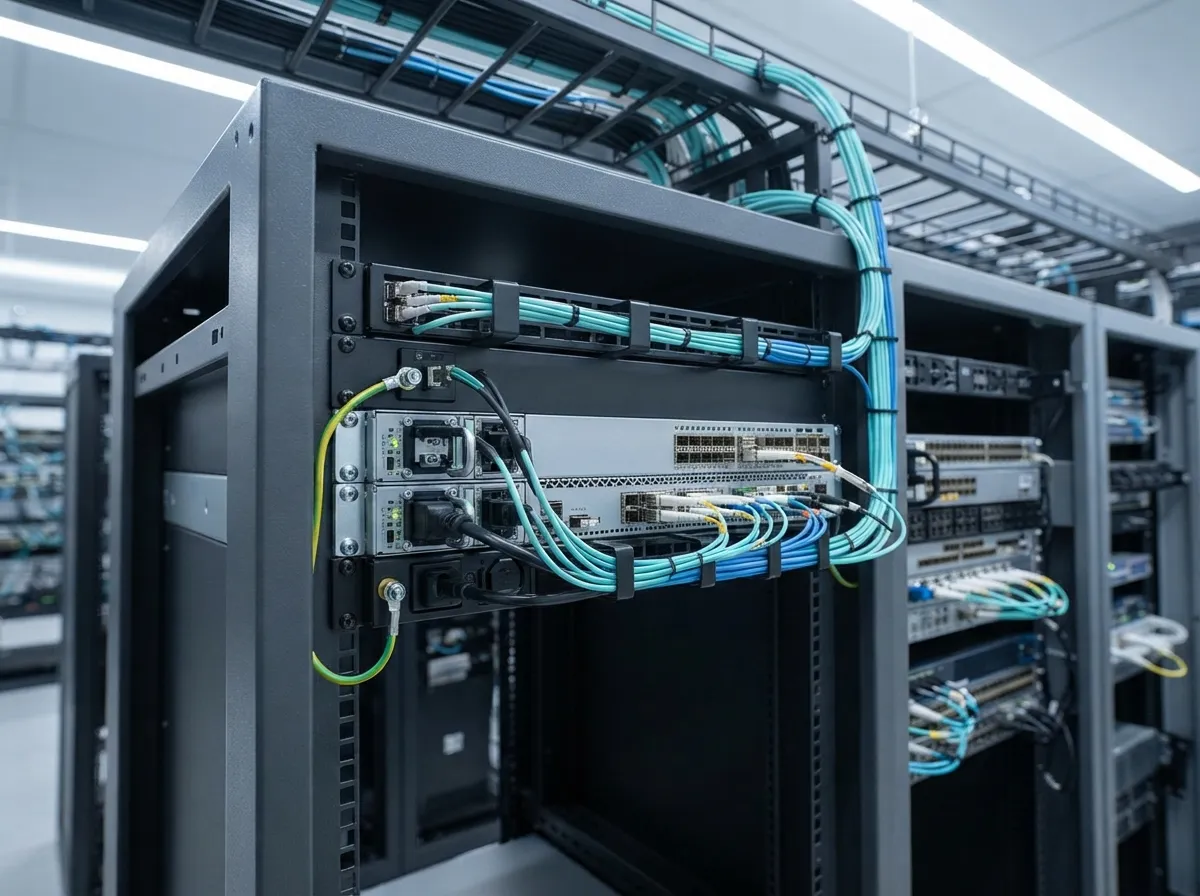
What Is the Arista DCS-7060SX2-48YC6-R?
The DCS-7060SX2-48YC6-R is a member of Arista’s 7060X2 series, a Gen 3, 1RU managed Layer 3 data center switch purpose-built for leaf-spine and top-of-rack (ToR) deployments. It is designed to handle high-throughput, low-latency traffic patterns typical of enterprise data centers, service provider networks, and cloud infrastructure environments.
The switch integrates 48 SFP28 ports supporting 1/10/25GbE connectivity alongside 6 QSFP28 ports capable of 40/100GbE uplinks. This port density makes it well-suited for aggregating server racks while maintaining sufficient uplink bandwidth to spine switches. Network Infrastructure Teams often select this class of switch when consolidating access-layer connectivity in environments transitioning from 10G to 25G server NICs.
Core Specifications Overview
Understanding the technical specifications helps procurement teams and network architects determine whether this switch aligns with capacity planning requirements. Below is a summary of the key published specifications for the platform.
|
Specification |
Detail |
|---|---|
|
Form Factor |
1RU, Gen 3 platform |
|
SFP28 Ports |
48 x 1/10/25GbE |
|
QSFP28 Ports |
6 x 40/100GbE (breakout capable) |
|
Switching Capacity |
3.6 Tbps (all ports active) |
|
Latency |
~450 ns (cut-through mode) |
|
Weight |
8.8 kg / 19.4 lbs |
|
Airflow Design |
Rear-to-front (per “-R” suffix) |
|
Power Supplies |
Redundant, hot-swappable |
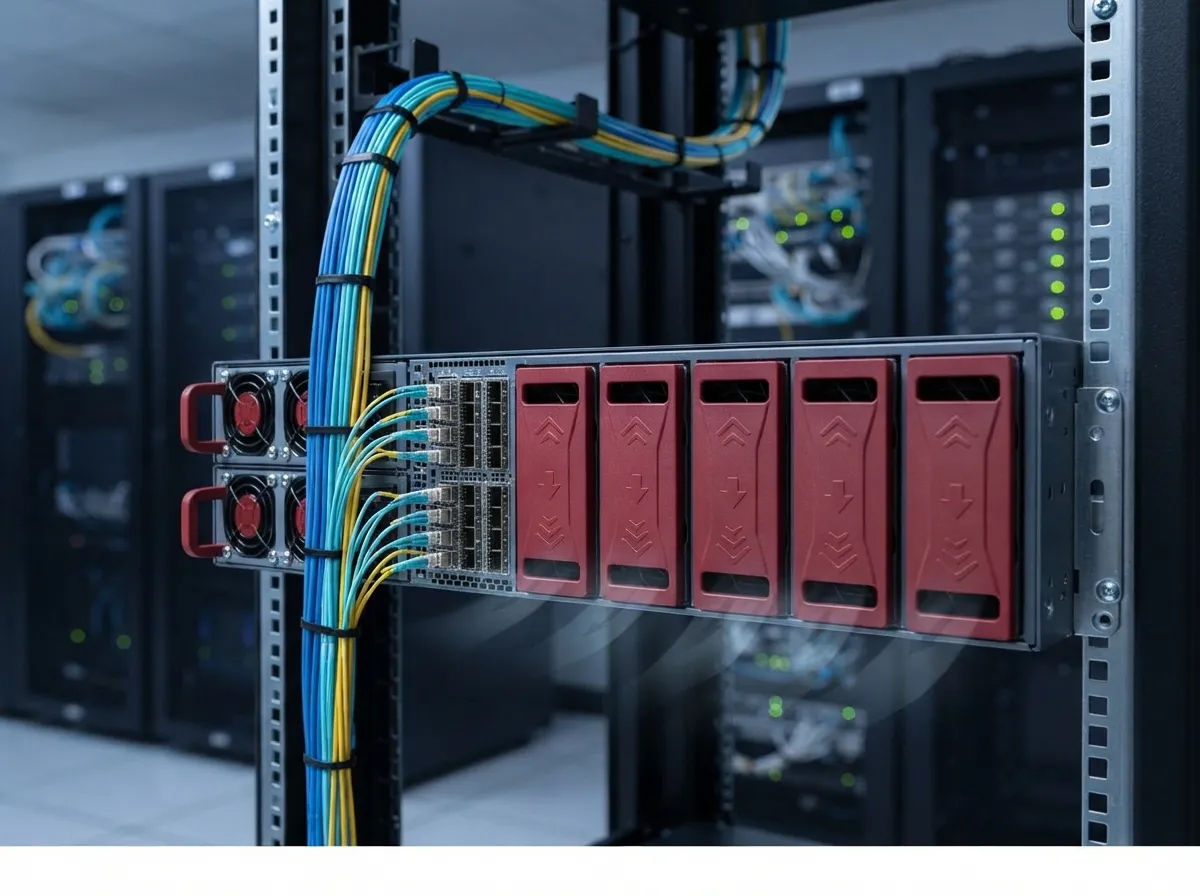
Understanding the “-R” Suffix and Airflow Direction
One of the most operationally significant details on this model is the “-R” designation, which indicates rear-to-front airflow. In Arista’s naming convention, switches without this suffix typically ship with front-to-rear airflow, while the “-R” variant reverses that direction to intake air from the rear of the rack and exhaust it toward the front.
This distinction is not cosmetic — it directly affects compatibility with existing hot aisle/cold aisle containment strategies. Data Center Operators must verify airflow direction before deployment, since mixing incompatible airflow switches within the same row can create thermal inefficiencies or even trigger overheating alarms. For facilities using rear-facing cold aisles or non-standard containment layouts, the rear-to-front airflow of the -R model often aligns better with existing cooling infrastructure.
-
Confirm your data hall’s hot aisle/cold aisle orientation before ordering
-
Cross-reference existing rack airflow standards with new switch procurement
-
Avoid mixing airflow directions within the same rack row
-
Consult facility engineering teams when airflow direction is ambiguous
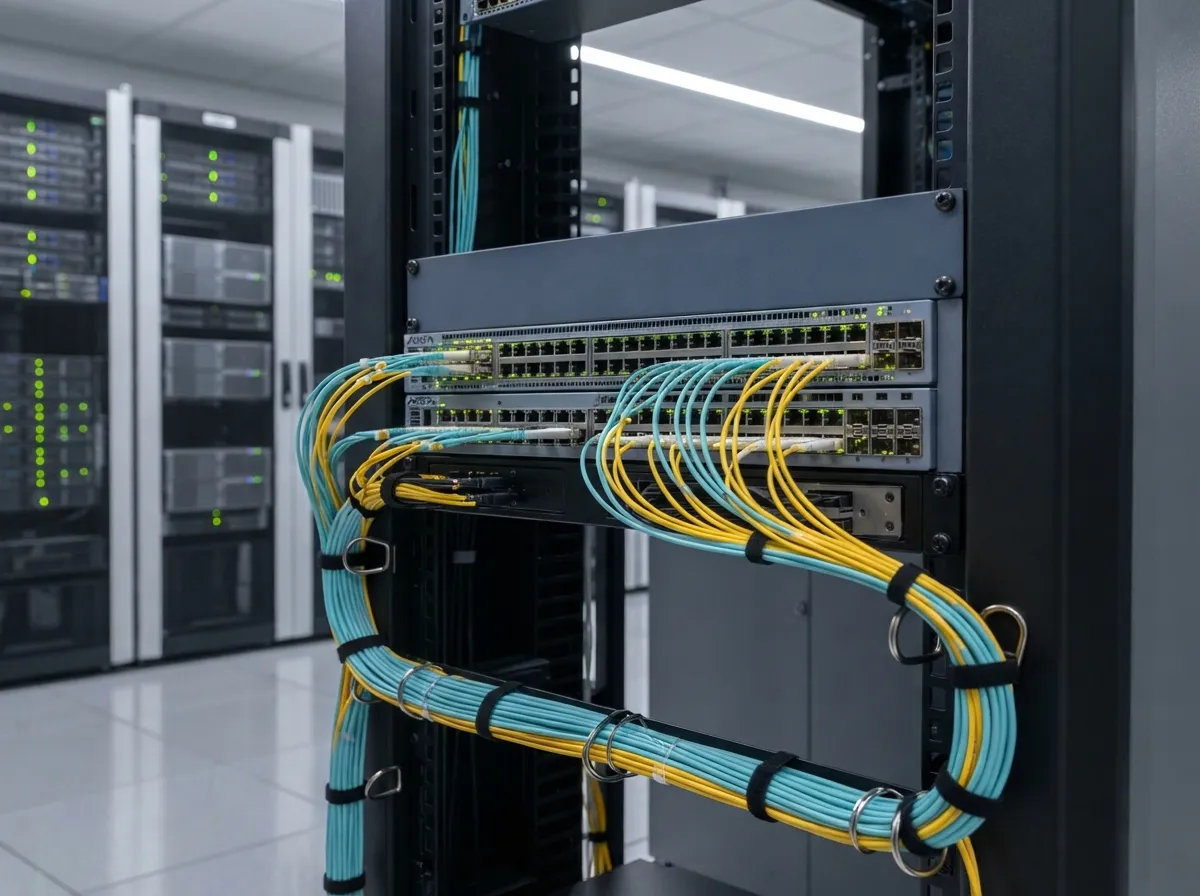
Throughput and Latency Performance
The DCS-7060SX2-48YC6-R delivers 3.6 Tbps of switching capacity when all ports are active, according to Arista’s published datasheet. This throughput figure reflects the aggregate bandwidth available across both the 48 SFP28 access ports and 6 QSFP28 uplink ports operating simultaneously at line rate.
Latency performance is equally critical for data center applications, particularly for financial trading floors, high-frequency computing clusters, and latency-sensitive East-West traffic in leaf-spine fabrics. The platform commonly achieves approximately 450 nanoseconds in cut-through forwarding mode, a figure that positions it competitively for workloads where microsecond-level delays compound across multiple switching tiers.
Why Low Latency Matters in Leaf-Spine Architectures
In a leaf-spine topology, traffic frequently traverses multiple switch hops between source and destination servers. Cumulative latency across leaf, spine, and potentially super-spine layers can materially affect application performance, especially for distributed databases, storage replication, and AI/ML training workloads that rely on tightly synchronized compute clusters.
Network Infrastructure Teams designing new fabrics should calculate worst-case hop latency across the entire topology rather than evaluating individual switch specifications in isolation. The 7060SX2-48YC6-R’s sub-microsecond latency profile helps minimize this cumulative delay, making it a reasonable choice for leaf-layer deployment in performance-sensitive environments.
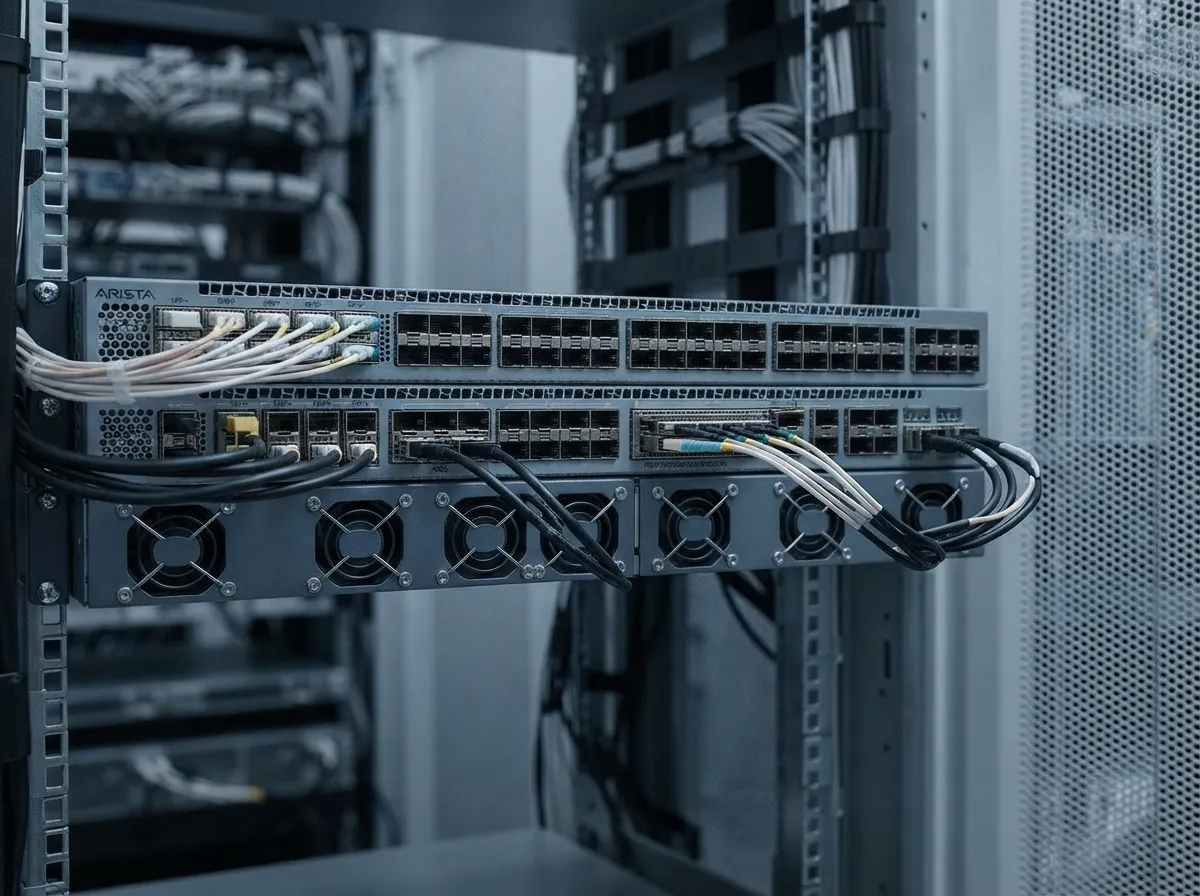
Port Flexibility and Breakout Configurations
A defining characteristic of the 7060SX2-48YC6-R is its support for flexible breakout and speed configurations on the QSFP28 uplink ports. Depending on deployment requirements, administrators can configure these ports for native 100GbE, native 40GbE, or breakout modes that split a single QSFP28 port into multiple lower-speed lanes.
This flexibility allows IT Procurement Specialists and network architects to standardize on a single hardware SKU while adapting port configuration to match evolving bandwidth requirements across different racks or pods. Rather than provisioning separate switch models for varying uplink speeds, teams can adjust configuration in software as network demands change.
-
Assess current uplink bandwidth requirements — Determine whether spine connections require 100GbE or if 40GbE remains sufficient for current traffic volumes.
-
Evaluate breakout cabling needs — Decide whether QSFP28 ports should be split into multiple lower-speed lanes to connect legacy equipment.
-
Plan for future scalability — Configure ports with headroom for anticipated traffic growth, particularly if server-side NICs are transitioning to higher speeds.
-
Document port-mapping standards — Establish consistent configuration templates across all leaf switches to simplify troubleshooting and audits.
-
Validate transceiver compatibility — Confirm optics and DAC/AOC cables are qualified for the specific speed and breakout mode selected.
Deployment Scenarios: Leaf-Spine and Top-of-Rack
The port density and throughput profile of the DCS-7060SX2-48YC6-R make it particularly well-suited to two common data center deployment models:
-
Top-of-rack (ToR) leaf switch: The 48 SFP28 ports provide ample connectivity for a full rack of 25GbE-connected servers, while the 6 QSFP28 uplinks aggregate traffic to spine switches.
-
Spine or aggregation layer: In smaller fabrics, the QSFP28 ports can serve as spine-facing uplinks, consolidating traffic from multiple leaf switches into a centralized aggregation point.
-
High-density server access: Environments running dense virtualization or containerized workloads benefit from the 25GbE server-facing ports, which offer more bandwidth per port than legacy 10GbE deployments.
-
Storage network fabric: The low-latency, high-throughput profile supports NVMe-oF and other storage protocols requiring predictable, high-bandwidth connectivity.
Mid-Sized Business Owners scaling their first dedicated data center footprint should note that while this switch is engineered for large-scale environments, its flexible port configuration and redundant components also make it viable for smaller, growth-oriented deployments that anticipate future expansion.
Sourcing Certified Pre-Owned Hardware Strategically
Given ongoing supply chain volatility and elevated pricing on new networking equipment, many organizations are turning to certified pre-owned hardware as a fiscally responsible alternative. Trifecta Networks, an IT partner specializing in refurbished and pre-owned networking equipment, provides enterprise customers with access to thoroughly tested data center switches like the DCS-7060SX2-48YC6-R at a fraction of new-unit costs.
All hardware sourced through Trifecta Networks includes an Advanced Replacement Lifetime Warranty, giving IT Procurement Specialists and Enterprise IT Managers confidence that certified pre-owned equipment carries the same operational assurance as new hardware, without the extended lead times often associated with new manufacturing cycles. This approach aligns with broader industry trends discussed in recent coverage of the 2026 IT hardware price surge, where organizations are increasingly prioritizing refurbished equipment to manage budget constraints.
Extending Hardware Lifecycles with Third-Party Maintenance
Beyond initial procurement, long-term operational support is equally important for data center switches expected to run continuously for years. Network Infrastructure Teams responsible for uptime SLAs often supplement pre-owned hardware purchases with third-party maintenance contracts that extend beyond standard manufacturer support windows.
Trifecta Networks’ Tri-Net program offers exactly this kind of coverage, providing responsive support and replacement services tailored to enterprise data center environments. You can learn more about Tri-Net’s third-party maintenance coverage to understand how it complements certified pre-owned switch deployments like the 7060SX2-48YC6-R.
Integration Considerations for Existing Infrastructure
Deploying any new switch platform requires careful attention to how it integrates with existing cabling, power distribution, and network management systems. Data Center Operators should verify that structured cabling infrastructure can support the 25G and 100G interfaces this switch provides, since older cabling plants designed for lower speeds may require upgrades.
Fiber optic connectivity plays a particularly important role here, and organizations planning a refresh around this switch class should review considerations outlined in why fiber optic cabling is critical for modern IT infrastructure. Similarly, teams unfamiliar with structured cabling standards may benefit from reviewing what structured cabling is and why it matters before finalizing a deployment plan.
-
Audit existing fiber and DAC cabling for compatibility with 25G/100G interfaces
-
Confirm rack power distribution supports redundant power supply requirements
-
Validate network management tooling supports Arista EOS integration
-
Plan for staged migration if replacing legacy 10G access switches
Evaluating Fit for Modern Data Center Requirements
Despite being part of an established product generation, the DCS-7060SX2-48YC6-R remains relevant for many modern data center use cases, particularly those centered on 25GbE server access with 100GbE uplinks. Organizations should evaluate their specific bandwidth requirements against this switch’s capabilities rather than assuming newer is always necessary.
According to industry coverage from Network World, enterprises continue to prioritize proven, field-tested switching platforms for mission-critical infrastructure, especially when budget constraints or supply chain delays affect access to newer models. Additionally, analysis from Tom’s Hardware on data center networking trends reinforces that established platforms with strong throughput and latency profiles remain viable for years beyond initial release, provided they meet current bandwidth demands.
Conclusion
The Arista DCS-7060SX2-48YC6-R remains a technically capable, well-documented platform for leaf-spine and top-of-rack deployments requiring dense 25GbE server connectivity paired with 100GbE uplink capacity. Its rear-to-front airflow design, sub-microsecond latency, and 3.6 Tbps switching capacity make it a strong candidate for organizations modernizing data center fabrics without over-provisioning for future needs they may not yet require.
For Enterprise IT Managers, Data Center Operators, and Procurement Specialists evaluating this switch for an upcoming infrastructure refresh, partnering with an experienced reseller of certified pre-owned networking equipment can significantly reduce acquisition costs while maintaining reliability through comprehensive warranty coverage. To explore available inventory and discuss deployment requirements specific to your environment, request a quote from Trifecta Networks and connect with a team experienced in sourcing and supporting enterprise-grade data center hardware.
FAQs
Q: What is the Arista DCS-7060SX2-48YC6-R used for?
A: It is a 1RU managed Layer 3 data center switch used primarily in leaf-spine and top-of-rack architectures, providing high-density 25GbE server connectivity with 100GbE uplink capability for enterprise and cloud data centers.
Q: How many ports does the DCS-7060SX2-48YC6-R have?
A: The switch includes 48 SFP28 ports supporting 1/10/25GbE speeds and 6 QSFP28 ports supporting 40/100GbE, with flexible breakout configurations available on the QSFP28 interfaces.
Q: What does the \”-R\” suffix mean on Arista switch models?
A: The \”-R\” suffix denotes rear-to-front airflow, meaning the switch draws air in from the rear of the rack and exhausts it toward the front, which is important for matching existing hot aisle/cold aisle cooling configurations.
Q: What is the switching capacity of the DCS-7060SX2-48YC6-R?
A: According to Arista’s datasheet, the switch delivers 3.6 Tbps of throughput when all ports are active, supporting high-density server aggregation without introducing bandwidth bottlenecks.
Q: Is the Arista DCS-7060SX2-48YC6-R still a good choice for modern data centers?
A: Yes, for organizations requiring 25GbE server access with 100GbE uplinks, this platform’s low latency and high throughput remain competitive, particularly when sourced as certified pre-owned equipment to reduce total infrastructure costs.